Every business operates in an environment where unexpected events can affect its finances, operations, reputation, and long-term growth. Changes in customer demand, increasing production costs, new competitors, cyberattacks, employee-related problems, and regulatory changes can create challenges for organisations. Even a well-managed company cannot eliminate every uncertainty, but it can prepare for potential problems through effective risk management.
Business risk is an important concept in entrepreneurship and business management because it helps organisations identify threats, evaluate their possible impact, and develop strategies to minimise losses. Understanding different types of commercial risks and their mitigation strategies allows business owners to make informed decisions, protect resources, and maintain business continuity.
What Is Business Risk?
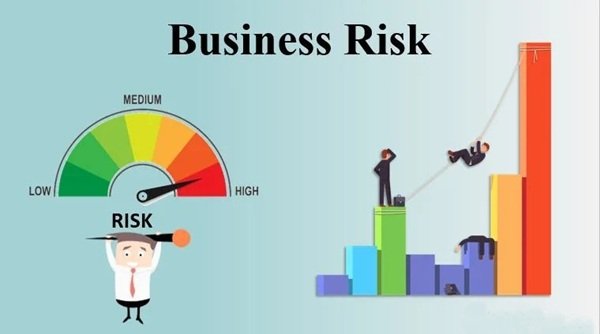
Business risk refers to the possibility of financial loss, operational disruption, reduced profitability, or failure to achieve business objectives due to uncertain internal or external events.
In simple words, business risk is the possibility that something unexpected may negatively affect a company’s performance or operations.
For example, a manufacturing company may face business risk if the price of raw materials suddenly increases. Similarly, an online business may experience financial losses because of a cyberattack, website failure, or customer data breach.
Business risks exist in organisations of all sizes, from small retail shops and startups to large multinational companies. Effective risk management does not guarantee that losses will never occur, but it helps businesses prepare and respond more effectively.
Types of Commercial Risks
Commercial risks arise from different business activities and market conditions. Some major types are explained below.
Financial Risk
Financial risk refers to the possibility of losses arising from poor financial decisions, insufficient cash flow, excessive borrowing, or changes in financial markets.
For example, a business that depends heavily on loans may struggle to repay its debt if sales decline or interest rates increase.
Mitigation Strategies:
- Prepare realistic budgets and financial forecasts.
- Maintain sufficient working capital and emergency reserves.
- Monitor cash flow, outstanding payments, and debt levels.
- Avoid unnecessary borrowing.
- Review financial performance regularly.
Market Risk
Market risk occurs when changes in market conditions affect the demand, pricing, or profitability of products and services.
Changes in customer preferences, economic conditions, competitor activities, and industry trends can create market-related uncertainty.
For example, a clothing retailer may experience declining sales when customer preferences shift towards different styles or brands.
Mitigation Strategies:
- Conduct regular market research.
- Monitor customer preferences and competitor activities.
- Diversify products and customer segments.
- Adjust pricing according to market conditions.
- Invest in product development and innovation.
Operational Risk
Operational risk arises from failures in internal processes, systems, employees, equipment, or everyday business activities.
Examples include machinery breakdowns, inventory errors, production delays, employee mistakes, and supply chain disruptions.
A manufacturing company may lose revenue if an important machine stops working and production cannot continue.
Mitigation Strategies:
- Establish standard operating procedures.
- Maintain equipment and infrastructure regularly.
- Train employees to perform their responsibilities correctly.
- Use quality control systems.
- Develop backup plans for critical operations.
Legal and Regulatory Risk
Legal and regulatory risk occurs when a business fails to comply with applicable laws, regulations, licences, or contractual obligations.
Businesses may face penalties, lawsuits, licence suspension, or reputational damage due to non-compliance.
For example, a company that ignores applicable employment regulations or tax filing requirements may face legal consequences.
Mitigation Strategies:
- Understand the laws applicable to the business.
- Maintain accurate legal and financial records.
- Renew licences and registrations on time.
- Review contracts before signing them.
- Consult qualified legal and tax professionals when necessary.
Cybersecurity Risk
Cybersecurity risk involves threats to business systems, networks, digital information, and online services. Common threats include phishing, ransomware, malware, unauthorised access, and data breaches.
For example, an e-commerce business may suffer financial and reputational losses if hackers gain access to customer information or payment systems.
Mitigation Strategies:
- Use strong passwords and multi-factor authentication.
- Install security updates and reliable antivirus protection.
- Back up important business data regularly.
- Train employees to identify phishing attempts.
- Restrict access to sensitive information.
- Prepare an incident response and recovery plan.
Reputational Risk
Reputational risk refers to the possibility of losing customer trust, public confidence, or business credibility because of negative publicity or unethical conduct.
Poor product quality, misleading advertising, data breaches, employee misconduct, and unresolved customer complaints can damage a company’s reputation.
Mitigation Strategies:
- Maintain transparent business practices.
- Provide reliable products and services.
- Respond to customer complaints promptly.
- Follow ethical business standards.
- Communicate honestly during business problems.
Strategic Risk
Strategic risk arises when business decisions, long-term plans, or growth strategies fail to achieve expected results.
For example, a company may invest heavily in a new product without properly studying market demand. If customers do not accept the product, the investment may result in substantial losses.
Mitigation Strategies:
- Conduct feasibility studies before major investments.
- Evaluate market trends and competitors.
- Set measurable business objectives.
- Review business strategies periodically.
- Avoid depending entirely on one product or market.
Supply Chain Risk
Supply chain risk occurs when the flow of raw materials, products, or services is interrupted. It may result from supplier failures, transportation problems, natural disasters, political instability, or shortages.
For example, a food manufacturer may face production delays if an essential ingredient becomes unavailable.
Mitigation Strategies:
- Maintain relationships with multiple suppliers.
- Keep suitable inventory of critical materials.
- Evaluate supplier reliability.
- Develop alternative transportation arrangements.
- Create contingency plans for supply interruptions.
Common Business Risk Mitigation Strategies
Although different risks require different responses, businesses can follow a systematic risk management process.
Risk Identification: Identify possible threats that may affect business operations, finances, employees, or reputation.
Risk Assessment: Evaluate the likelihood of each risk and its potential impact. Businesses can use risk matrices to prioritise high-impact threats.
Risk Avoidance: Avoid activities that create unacceptable levels of risk. For example, a company may decide not to enter a market where regulatory and financial uncertainties are too high.
Risk Reduction: Introduce controls that reduce the likelihood or impact of a risk, such as employee training, quality checks, and cybersecurity measures.
Risk Transfer: Transfer certain financial consequences to another party through insurance or suitable contractual arrangements. However, insurance does not eliminate every type of business risk.
Risk Acceptance: Accept a manageable risk when the cost of eliminating it is greater than the potential loss, while continuing to monitor it.
Business Risk Assessment Example
A small online retail business may identify the following risks:
| Business Risk | Potential Impact | Mitigation Strategy |
| Cyberattack | Customer data loss | Security controls and regular backups |
| Supplier failure | Delivery delays | Maintain alternative suppliers |
| Cash flow shortage | Payment difficulties | Financial forecasting and reserves |
| Negative customer reviews | Reputation damage | Better customer support |
| New competitors | Reduced sales | Product improvement and market research |
This assessment helps the business prioritise its resources and prepare for potential disruptions.
Importance of Business Risk Management
Effective risk management offers several benefits:
- Protects financial resources: Helps reduce unexpected losses and control unnecessary expenses.
- Supports business continuity: Prepares organisations to respond to disruptions.
- Improves decision-making: Provides information about potential consequences before major decisions.
- Strengthens customer confidence: Responsible risk management helps protect customer information and service quality.
- Supports long-term growth: Businesses can pursue opportunities while understanding the risks involved.
Conclusion
Business risk refers to uncertainty that can negatively affect an organisation’s finances, operations, reputation, or objectives. Financial, market, operational, legal, cybersecurity, reputational, strategic, and supply chain risks are common challenges faced by businesses.
Although risks cannot be eliminated completely, companies can manage them through identification, assessment, prevention, insurance, financial planning, and contingency arrangements. A systematic risk management approach helps organisations protect their resources, respond to unexpected events, and achieve sustainable growth.
Frequently Asked Questions (FAQs)
Q. What is business risk in simple words?
Business risk is the possibility that unexpected events or decisions may cause financial losses, operational problems, or difficulties in achieving business goals.
Q. What are the main types of business risks?
Major types include financial, market, operational, legal, cybersecurity, reputational, strategic, and supply chain risks.
Q. What is the difference between business risk and financial risk?
Business risk covers all uncertainties that can affect an organisation, while financial risk specifically relates to financial losses, cash flow, debt, and financial market changes.
Q. How can small businesses reduce commercial risks?
Small businesses can reduce risks through budgeting, insurance, market research, employee training, cybersecurity measures, supplier diversification, and legal compliance.
Q. What is risk mitigation in business?
Risk mitigation refers to actions taken to reduce the likelihood or potential impact of risks on business activities and objectives.
Q. Can business risks be completely eliminated?
No. Businesses cannot eliminate every uncertainty. However, effective planning, monitoring, preventive controls, and contingency arrangements can reduce their impact.