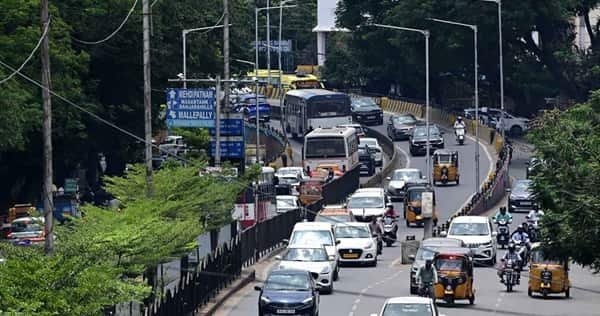
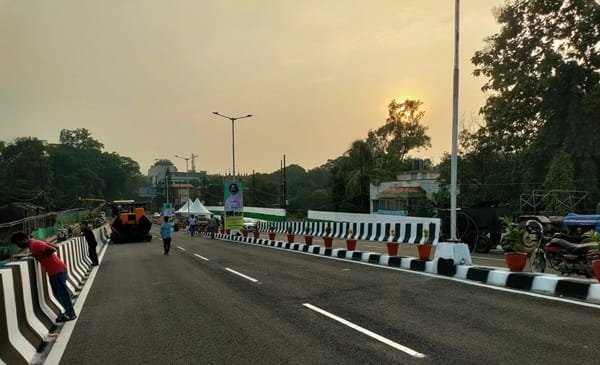
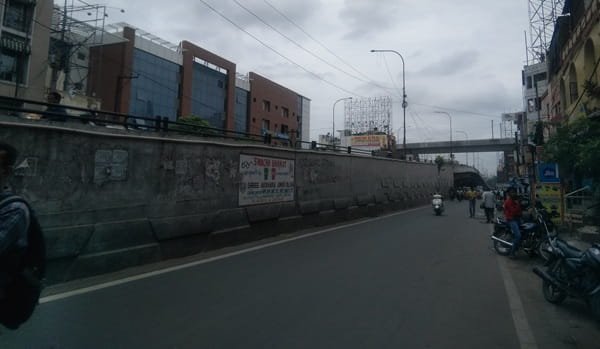
IIT Flyover is a major grade separator on Delhi’s Outer Ring Road, positioned at the junction where Aruna Asaf Ali Marg and Africa Avenue meet the corridor near IIT Delhi. It was built as part of a larger programme to remove bottlenecks between the IIT Gate area and the NH-48 side of south Delhi. The location is strategically important because Outer Ring Road carries traffic between Noida-side and south Delhi corridors on one side and Munirka, Vasant Vihar, Dhaula Kuan and Gurugram-bound roads on the other.
The flyover is about 800 metres long and was completed in 2009 at a reported project cost of about Rs. 82.60 crore. It forms one element of the grade-separated Outer Ring Road system developed along with the Munirka and Rao Tula Ram-side projects. The flyover improves uninterrupted movement across the Aruna Asaf Ali Marg-Africa Avenue junction, but the roads beneath it remain busy because they serve IIT Delhi, Safdarjung Development Area, Vasant Kunj-side links, institutional campuses and local markets.

IIT Flyover, Delhi Quick Overview
| Particular | Details |
|---|---|
| Location | Outer Ring Road near IIT Delhi, South Delhi |
| Main Junction | Outer Ring Road with Aruna Asaf Ali Marg and Africa Avenue |
| Length | About 800 metres |
| Completed | 2009 |
| Reported Project Cost | About Rs. 82.60 crore |
| Main Corridor | Outer Ring Road |
| Nearest Metro | IIT Delhi Metro Station, Magenta Line |
| Key Role | Carries through traffic above a busy south Delhi junction |
Where Is IIT Flyover, Delhi Located?
IIT Flyover stands on Outer Ring Road close to IIT Delhi, Hauz Khas, Safdarjung Development Area and the Africa Avenue side of south Delhi. The elevated carriageway serves through traffic, while the junction below handles local turning movements toward IIT Delhi, Green Park, RK Puram-side roads and Vasant Kunj connections.
The flyover should not be confused with Rao Tula Ram Flyover farther west. Both form part of the same broad Outer Ring Road travel corridor, but they are separate structures with different junctions and traffic functions.
Connectivity of IIT Flyover, Delhi
Eastbound movement from IIT Flyover leads toward Panchsheel Park, Chirag Delhi and the larger south-east Delhi road network, from where traffic can continue toward Nehru Place, Kalkaji and Noida-side connections. Westbound movement leads toward Munirka, Vasant Vihar, Rao Tula Ram Marg, Dhaula Kuan and the NH-48 corridor toward Gurugram and the airport.
Aruna Asaf Ali Marg provides access toward Vasant Kunj, JNU and Mehrauli-side areas, while Africa Avenue serves the Safdarjung Enclave and RK Puram-side network. The flyover therefore carries long-distance Outer Ring Road traffic over a junction that still needs strong street-level access for institutions and neighbourhoods.
Directions to IIT Flyover, Delhi
Lane selection should be made before the Aruna Asaf Ali Marg-Africa Avenue junction because local turns separate from the Outer Ring Road through lanes.
| Starting Point | Route / Direction |
|---|---|
| Chirag Delhi / Panchsheel Side | Follow Outer Ring Road west toward IIT and remain in the flyover lanes for through movement toward Munirka and Dhaula Kuan. |
| Munirka / Vasant Vihar | Travel east on Outer Ring Road and use the flyover for through movement toward IIT, Panchsheel and Chirag Delhi. |
| IIT Delhi Campus | Use the surface-road junction and campus access indicated by signs; the flyover is for through movement rather than campus entry. |
| JNU / Vasant Kunj | Approach through Aruna Asaf Ali Marg and join Outer Ring Road in the required direction below or near the flyover. |
| Safdarjung / Africa Avenue | Use Africa Avenue toward the IIT junction and select the correct Outer Ring Road direction before merging. |
| Gurugram / Airport Side | Use the Outer Ring Road-RTR-Dhaula Kuan network west of IIT; the flyover is one part of the route, not a direct airport expressway. |
Congestion under the flyover remains a recognised traffic issue because local turning traffic, buses and institutional access continue at street level even when the elevated carriageway is moving.
Nearby Areas Around IIT Flyover, Delhi
The flyover serves a concentration of major educational, residential and arterial-road destinations in south Delhi.
| Nearby Area / Landmark | Why It Is Relevant |
|---|---|
| IIT Delhi | Major educational campus that gives the flyover its common name. |
| Hauz Khas | Residential-commercial district east of the junction. |
| Safdarjung Development Area | Dense mixed-use locality close to Africa Avenue. |
| Munirka | Important residential and transport district west on Outer Ring Road. |
| JNU | Large university campus reached through Aruna Asaf Ali Marg-side roads. |
| RK Puram | Major residential-government district connected through Africa Avenue and nearby roads. |
| Vasant Vihar | South Delhi neighbourhood on the westbound Outer Ring Road corridor. |
| Chirag Delhi | Major grade-separated junction east of IIT on Outer Ring Road. |
Public Transport and Local Access
IIT Delhi Metro Station on the Magenta Line is the most convenient rapid-transit option for the immediate area. Hauz Khas Metro Station, an interchange between the Yellow and Magenta lines, provides another strong option for passengers approaching from other parts of Delhi.
DTC buses, autos and cabs use the surface roads around IIT and Hauz Khas. Because the flyover bypasses the local junction, passenger pickup and drop-off should take place at street level rather than on the elevated carriageway.
Driving Tips
The flyover is part of a fast arterial corridor, but both ends return traffic quickly to heavily used urban roads.
- Keep a larger following gap during peak hours because queues can form suddenly beyond the crest when downstream traffic slows.
- Watch for lane changes from vehicles positioning for Munirka, IIT or Aruna Asaf Ali Marg exits immediately after the flyover.
- During winter fog, reduce speed before the junction; overhead signs and ramp splits can become difficult to read at normal arterial-road speeds.
- Two-wheelers should stay clear of bus and SUV blind spots in the weaving sections at both ends.
- Do not stop on the flyover for campus or Metro pickups; use designated street-level access points.
- During major IIT events or examinations, expect additional local traffic near campus gates even when Outer Ring Road is otherwise moving.
FAQs
Q. Is IIT Flyover the same as Rao Tula Ram Flyover?
No. They are separate flyovers on the broader Outer Ring Road corridor. IIT Flyover is at the Aruna Asaf Ali Marg-Africa Avenue junction, while Rao Tula Ram Flyover lies farther west.
Q. Does IIT Flyover enter the IIT Delhi campus?
No. It carries Outer Ring Road traffic over the junction. Campus access remains at street level through the authorised IIT gates.
Q. Why is the road under IIT Flyover still listed as a congestion point?
The flyover removes through traffic from the signal, but local turns, buses, campus access and neighbourhood traffic continue below it.
Q. Is IIT Flyover tolled?
No separate toll is charged for ordinary use of the flyover.
Q. Can airport-bound traffic use IIT Flyover?
Yes, it can form part of an Outer Ring Road route toward Munirka, RTR Marg and Dhaula Kuan, but it is not a direct airport-only expressway.
Q. Why was the flyover built together with other Outer Ring Road projects?
The IIT, Munirka and RTR-side grade separators were planned to remove a sequence of bottlenecks between south Delhi and the NH-48 side rather than improve only one isolated junction.