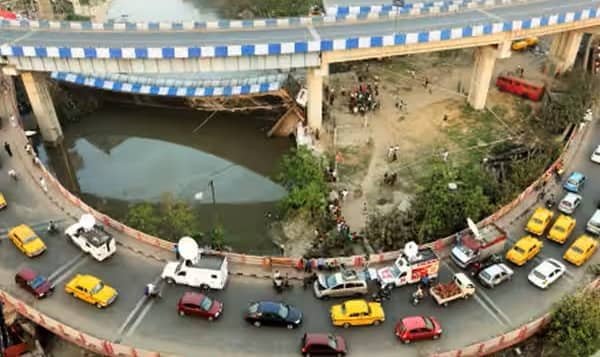
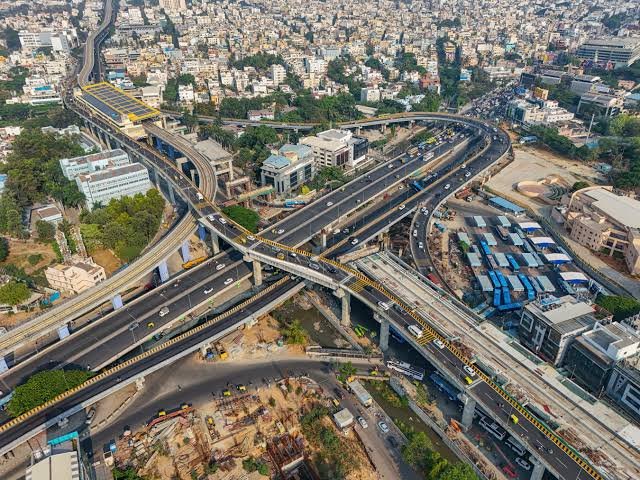
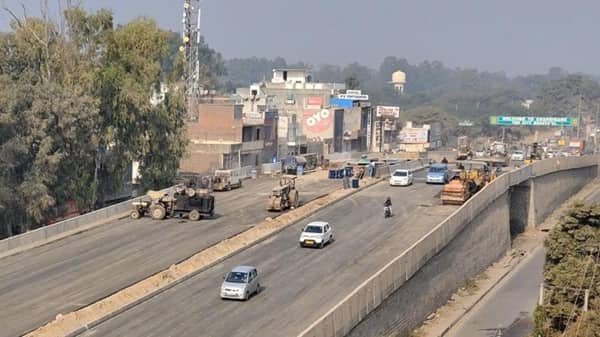
Kalanagar Flyover is a multi-arm interchange at one of Mumbai’s most important traffic gateways: the junction where Bandra-Kurla Complex, the Bandra-Worli Sea Link, Dharavi-side roads and the Western Express Highway approach all compete for space. Instead of functioning as one straight bridge, the project uses separate elevated arms to send vehicles directly between BKC, the Sea Link and Dharavi without forcing every movement through the signalised Kalanagar junction.
MMRDA developed three principal arms. Arm B carries traffic from the Bandra-Worli Sea Link toward BKC and is about 804 metres long; Arm C carries BKC traffic toward the Sea Link and is about 653 metres long. Arm D, a 340-metre connection from Dharavi toward the Sea Link, was inaugurated in August 2025 and completed the third major directional movement. The result is a junction that now separates several high-volume routes that once met at ground level.
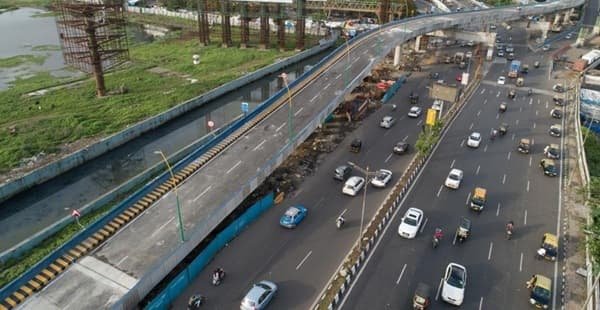
Kalanagar’s role has become even more important with the growth of BKC and the opening of Mumbai Metro Line 3. BKC now has underground Metro access, while Bandra station, the Sea Link and east-west road links continue to generate intense surface traffic. The flyover therefore works as part of a larger transport hub rather than as a stand-alone shortcut.
Kalanagar Flyover Quick Overview
| Particular | Details |
|---|---|
| Location | Kalanagar Junction, Bandra East, Mumbai, Maharashtra |
| Structure Type | Three-arm directional flyover system |
| Arm B | Bandra-Worli Sea Link to BKC – about 804 m |
| Arm C | BKC to Bandra-Worli Sea Link – about 653 m |
| Arm D | Dharavi to Bandra-Worli Sea Link – about 340 m |
| Arm B/C Opened | 2021 |
| Arm D Opened | August 2025 |
| Authority | Mumbai Metropolitan Region Development Authority (MMRDA) |
Where Is Kalanagar Flyover Located?
Kalanagar Flyover is located in Bandra East at the western edge of Bandra-Kurla Complex. The junction lies close to the Western Express Highway approach, Dharavi, Bandra railway station-side roads and the entry/exit network for the Bandra-Worli Sea Link.
The flyover arms are directional. A vehicle cannot treat the structure as one continuous two-way bridge because each arm is designed for a specific movement. Road signs before Kalanagar are therefore more important than simply following the flyover visible ahead.
Connectivity of Kalanagar Flyover
Arm B provides a direct elevated movement from the Sea Link side toward BKC, reducing the need to descend into the Kalanagar signal system. Arm C performs the reverse movement from BKC toward the Sea Link, helping office and South Mumbai-bound traffic leave the business district more efficiently.
Arm D adds a separate Dharavi-to-Sea Link movement and gives traffic from the Dharavi side a signal-free connection toward South Mumbai through the Sea Link corridor. At street level, other roads continue to distribute traffic toward Bandra East, Western Express Highway, Sion-Dharavi Road and local BKC streets.
Directions to Kalanagar Flyover
Kalanagar is a directional interchange, so the correct arm depends on the origin and destination rather than simply the side of the road.
| Starting Point | Route / Direction |
|---|---|
| Bandra-Worli Sea Link | Use Arm B for BKC-bound movement; follow separate signs for Bandra East, WEH or other local destinations. |
| BKC | Use Arm C when heading toward the Sea Link and South Mumbai; use surface roads for Bandra station-side or local BKC exits. |
| Dharavi | Use Arm D for the direct movement toward the Bandra-Worli Sea Link where indicated. |
| Western Express Highway | Approach Kalanagar through Bandra East and follow signs for BKC, Dharavi or the Sea Link before the arm split. |
| Bandra East / Railway Station | Remain on the local surface-road system unless the destination specifically requires BKC or Sea Link movement. |
| South Mumbai | Traffic arriving through the Sea Link can use the relevant Kalanagar arm for BKC; Dharavi-side traffic can join the Sea Link through Arm D. |
BKC road layouts can change during major events, security restrictions or infrastructure works. Lane-control signs at the junction should be followed even when a navigation app suggests an older movement.
Nearby Areas Around Kalanagar Flyover
Kalanagar sits at the edge of a major business district and close to several of Mumbai’s busiest transport corridors.
| Nearby Area / Landmark | Why It Is Relevant |
|---|---|
| Bandra-Kurla Complex | Mumbai’s major commercial and financial district directly served by the flyover. |
| Bandra-Worli Sea Link | High-capacity coastal road link connected by the Kalanagar arms. |
| Dharavi | Dense residential-industrial district connected by Arm D and surface roads. |
| Bandra East | Railway-station and commercial area immediately west/north-west of the junction. |
| Western Express Highway | Major north-south arterial reached through the Bandra East road network. |
| Bandra Railway Station | Important suburban rail hub about a short road transfer from Kalanagar. |
| Mithi River / BKC Edge | Geographic edge shaping the road approaches around Kalanagar. |
| Sion-Dharavi Corridor | Important eastern connection feeding the junction from central Mumbai. |
Public Transport and Local Access
BKC is served by the underground Metro Line 3 (Aqua Line), which is fully operational across its complete corridor. Bandra railway station on the Western suburban line and Kurla station on the Central line also serve BKC through frequent BEST buses, private feeders, autos and cabs.
The flyover itself is for road traffic and does not provide passenger stopping areas. Office commuters transferring to Metro, buses or suburban rail should use designated BKC or station-side pickup points rather than the elevated arms.
Driving Tips
The main driving challenge at Kalanagar is choosing the correct directional arm before the lanes divide.
- Read the overhead destination signs early; a wrong arm can carry a vehicle toward the Sea Link or BKC with limited immediate opportunity to reverse direction.
- Keep speed controlled on the curved arms, particularly during monsoon rain when bridge surfaces and joints can become slippery.
- Allow extra space around buses and taxis near BKC exits where vehicles may change lanes quickly for office drop-offs.
- During major BKC events, expect temporary holding, police barricades or altered pickup zones on surface roads.
- Do not stop on the flyover to check directions; complete the arm and use the next safe legal turning point.
- Motorists unfamiliar with the Sea Link should confirm toll/payment arrangements for the Sea Link itself, which are separate from use of the Kalanagar flyover arms.
FAQs
Q. Is Kalanagar Flyover one bridge or several arms?
It is a directional multi-arm system. Arm B links the Sea Link to BKC, Arm C links BKC to the Sea Link and Arm D links Dharavi to the Sea Link.
Q. Why was Arm D opened years after Arms B and C?
The Dharavi-Sea Link connection was the final major arm of the project and was completed later, opening in August 2025.
Q. Is there a separate toll for Kalanagar Flyover?
No separate toll plaza operates on the flyover arms. Any toll associated with the Bandra-Worli Sea Link is separate.
Q. Does Kalanagar Flyover connect directly to the Coastal Road?
It connects with the Bandra-Worli Sea Link corridor. Mumbai’s larger Coastal Road network is a separate system, even though the routes can form part of the same north-south journey.
Q. Can every BKC-bound vehicle use the same flyover arm?
No. The usable arm depends on the approach direction. Traffic from the Sea Link uses Arm B, while vehicles arriving from other parts of Bandra or the Western Express Highway may use surface BKC entries.
Q. Why is Kalanagar still busy after all three arms opened?
The flyovers remove selected through movements, but BKC office traffic, railway-station access, WEH traffic and local Bandra-Dharavi movements still meet at the surrounding surface roads.