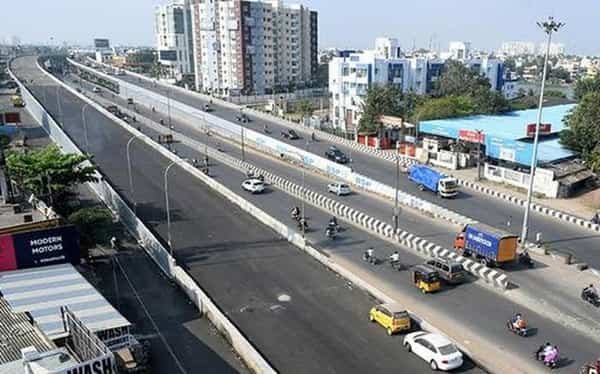
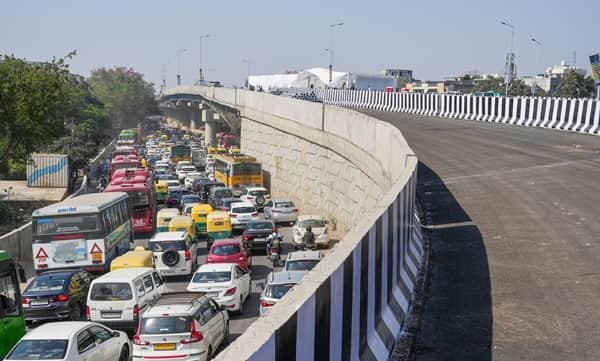
Silk Board Flyover sits at one of Bengaluru’s most famous traffic junctions, where Hosur Road meets the Outer Ring Road in the south-east of the city. The junction is a gateway to Electronic City, HSR Layout, BTM Layout, Koramangala and the large IT corridor stretching along the ORR. For years, ‘Silk Board traffic’ became shorthand for Bengaluru congestion because an enormous number of office, residential and inter-city trips converged at the same crossing.
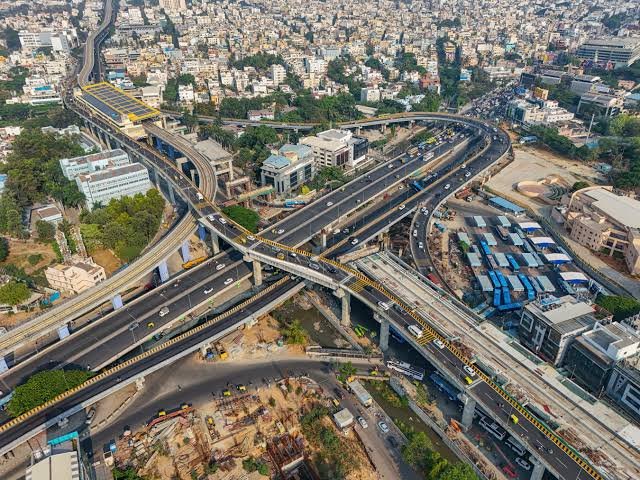
The junction has changed substantially. The older road flyover still forms part of the traffic system, while the newer double-decker elevated road between Central Silk Board and Ragigudda has added dedicated road capacity above the metro structure. The full road corridor was opened in 2026, and Central Silk Board Metro Station is already operational on Namma Metro’s Yellow Line. Blue Line construction continues around the interchange, so travellers should distinguish the existing flyover, the new elevated ramps and the metro viaduct when following directions.
Silk Board Flyover Quick Overview
| Particular | Details |
| Location | Central Silk Board Junction, South-East Bengaluru |
| Main Roads | Hosur Road and Outer Ring Road |
| Road Role | Gateway between central/south Bengaluru, Electronic City and the ORR tech corridor |
| New Elevated Link | Double-decker road corridor towards Ragigudda, fully opened in 2026 |
| Metro | Central Silk Board Station is operational on the Yellow Line |
| Future Interchange | Blue Line connection is under construction |
| Key Nearby Areas | BTM Layout, HSR Layout, Koramangala, Madiwala, Bommanahalli and Electronic City |
Where Is Silk Board Flyover Located?
Central Silk Board Junction lies where Hosur Road crosses the Outer Ring Road near BTM Layout and HSR Layout. Northbound Hosur Road leads towards Madiwala and central Bengaluru, while southbound traffic continues towards Bommanahalli, Electronic City and Hosur.
The Outer Ring Road branches east towards HSR Layout, Bellandur and the IT corridor. The newer elevated road towards Ragigudda serves another set of movements towards BTM, Jayanagar and JP Nagar. Because several elevated levels now exist, first-time drivers should rely on lane signs rather than assuming every ramp marked Silk Board serves the same direction.
Connectivity of Silk Board Flyover
Hosur Road provides direct connectivity between central Bengaluru and Electronic City/Hosur. The ORR provides east-west movement towards HSR Layout, Bellandur and further technology districts. Local roads connect the junction with BTM Layout, Koramangala and Madiwala.
The Ragigudda-Silk Board double-decker corridor has created an additional elevated option for some south Bengaluru movements, reducing the need to pass through the surface signal. Metro access has also changed commuting patterns by giving Electronic City-side passengers a rail alternative to the road corridor.
Directions to Silk Board Flyover
The table below gives the most practical approach from major surrounding corridors. Exact lane choice can change with traffic management, so road signs and live navigation should take priority.
| Starting Point | Route / Direction |
| Electronic City / Hosur | Travel north on Hosur Road towards Bengaluru and follow signs for Central Silk Board, ORR, BTM or city centre. |
| Madiwala / Central Bengaluru | Travel south on Hosur Road and select the Electronic City through movement or the correct ORR/BTM ramp before Silk Board. |
| HSR Layout / ORR East | Approach on Outer Ring Road towards Silk Board and follow the signed lane for Hosur Road, BTM/Jayanagar side or local Silk Board movement. |
| BTM Layout | Use local BTM approaches or the relevant elevated corridor movement; surface access is still required for many neighbourhood destinations. |
| Ragigudda / Jayanagar | Use the double-decker elevated road where the signed movement matches your destination, or use the local road network for nearby areas. |
| Koramangala | Approach via Madiwala/inner roads towards Silk Board; avoid entering the ORR through lane unless your destination is beyond the junction. |
Nearby Areas Around Silk Board Flyover
These are the main neighbourhoods and activity areas commonly associated with the junction and its approach roads.
| Nearby Area | Why It Is Relevant |
| BTM Layout | Major residential and commercial neighbourhood immediately west of the junction. |
| HSR Layout | Large residential and office locality east of Silk Board along the ORR. |
| Madiwala | Dense inner-city locality north of the junction on Hosur Road. |
| Koramangala | Major business, residential and dining district north-east of Silk Board. |
| Bommanahalli | South Bengaluru locality on Hosur Road towards Electronic City. |
| Electronic City | Large IT and employment hub further south on the Hosur Road corridor. |
| Ragigudda / Jayanagar Side | South Bengaluru corridor now linked to Silk Board by the double-decker elevated road. |
Public Transport and Metro Access
Central Silk Board Metro Station is operational on the Yellow Line, providing direct rail connectivity towards RV Road in one direction and the Electronic City/Bommasandra corridor in the other. This is a major improvement for commuters who previously depended almost entirely on road travel through the junction.
The station is also being developed as a future interchange with the Blue Line along the Outer Ring Road. BMTC buses remain extremely important, and bus stops are spread across different arms of the junction, so passengers should confirm the correct boarding side.
Driving Tips for Silk Board Flyover
Check whether your navigation route uses the older flyover, the new double-decker road or the surface junction.
For Electronic City, stay with the Hosur Road movement unless your app directs you to a specific elevated ramp.
Expect temporary lane adjustments while Blue Line works continue around the interchange.
Use the metro for Electronic City/RV Road trips when it is more predictable than road traffic.
Never stop on an elevated ramp to check directions; continue to a safe local road and reroute.
FAQs
Q. 1. Is Silk Board Flyover the same as the new double-decker flyover?
Not exactly. The junction already had an older road flyover. The newer double-decker corridor is a separate elevated road built with the metro structure between Silk Board and Ragigudda.
Q. 2. Is Central Silk Board Metro Station open?
Yes. The station is operational on the Yellow Line. The future Blue Line connection at the same interchange is still under development.
Q. 3. Has the new elevated road completely removed Silk Board congestion?
No. It has redistributed several traffic streams and improved some movements, but the junction still handles very high volumes and construction-related lane changes can affect surface traffic.
Q. 4. Which road should I take for Electronic City?
Hosur Road is the principal corridor from Silk Board towards Bommanahalli and Electronic City. Follow the Electronic City/Hosur signs because some elevated ramps serve other directions.
Q. 5. Can I reach HSR Layout without entering Hosur Road southbound?
Yes. HSR is reached from the Outer Ring Road side. Select the ORR movement at the junction rather than staying with the Electronic City through lanes.
Q. 6. Is walking across Silk Board Junction advisable?
Use metro access, footpaths and designated pedestrian crossings. Do not attempt to cross fast-moving ramps or multilane carriageways where no controlled crossing exists.