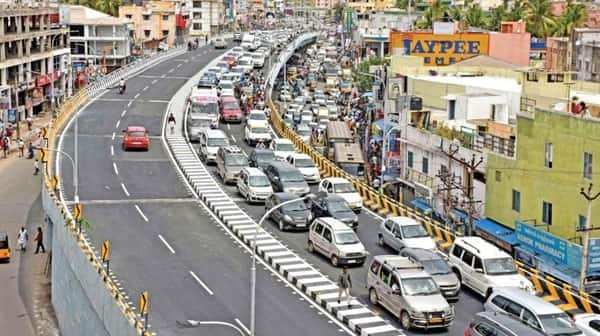
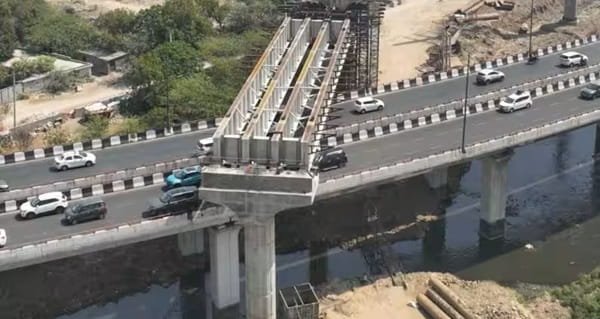
NAD Junction is one of Visakhapatnam’s most important road nodes because routes from Gajuwaka, Pendurthi, Maddilapalem and the airport side all converge in the same area. It also acts as a gateway toward Simhachalam, the western suburbs and routes leading farther inland. Before the grade separator was built, the junction had to manage large volumes of city buses, industrial traffic, airport-bound vehicles and local movement at one surface intersection.
The NAD Flyover was designed as a multi-level urban solution rather than a conventional straight bridge. The project combines a rotary elevated arrangement with a six-lane underpass so that different traffic streams can be separated vertically. Its circular form has become one of the most recognisable road structures in Visakhapatnam. The project was developed by the urban development authority and was formally inaugurated in December 2021 after years of construction.
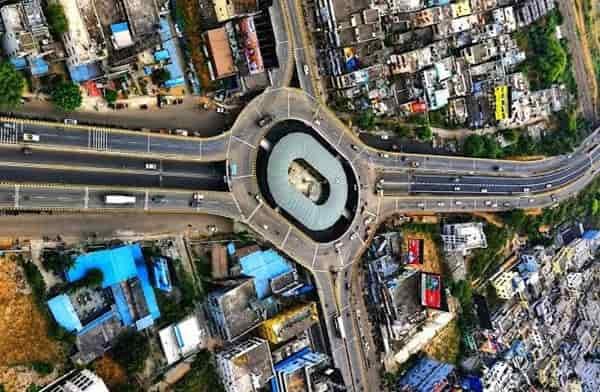
Its importance has grown as Visakhapatnam has expanded westward and as airport and regional-bus movements have changed. NAD remains a transfer point for traffic heading between Gajuwaka, Pendurthi, the city centre, Simhachalam and the airport corridor, so the flyover functions as a citywide interchange rather than a neighbourhood bridge.
NAD Flyover Quick Overview
| Particular | Details |
|---|---|
| Location | NAD Junction, Visakhapatnam, Andhra Pradesh |
| Structure Type | Multi-level rotary flyover/grade separator with underpass |
| Major Roads Served | Gajuwaka, Pendurthi, Maddilapalem and airport-side routes |
| Project Cost | About Rs. 150 crore at inauguration |
| Opened | December 2021 |
| Key Feature | Circular elevated rotary arrangement |
| Underpass | Six-lane through movement beneath the junction |
| Main Role | Separates major cross-city traffic streams at NAD Junction |
Where Is NAD Flyover Located?
NAD Junction lies in the western-central part of Visakhapatnam, close to the airport-side road network and the corridors leading toward Gopalapatnam and Pendurthi. Roads from Gajuwaka and the industrial south-west meet traffic moving toward Maddilapalem and central Visakhapatnam, while another set of routes leads toward Simhachalam and inland areas.
The junction is also a useful orientation point for travellers because it sits between Visakhapatnam’s industrial belt, airport side and western residential growth areas. The elevated rotary can be seen from several approaches, but individual ramps serve different movements, so the correct lane matters well before reaching the centre of the junction.
Why NAD Flyover Is Important
A normal signalised intersection would force several large traffic streams to stop and cross each other. The NAD design separates them by level, allowing some vehicles to pass under the junction while turning or distributing traffic uses the rotary and connecting ramps.
This is particularly useful for buses and commercial vehicles travelling between Gajuwaka and the rest of the city. It also improves access toward Pendurthi and Simhachalam, both of which handle residential, pilgrimage and regional traffic in addition to local trips.
Connectivity of NAD Flyover
South-westbound movement leads toward Gajuwaka, the industrial belt and highway connections serving Anakapalli-side traffic. West and north-west routes connect toward Gopalapatnam, Pendurthi, Kothavalasa and the road network used for Araku-side travel. The Simhachalam approach is also reached through this western network.
Eastbound routes connect NAD with Marripalem, Maddilapalem and central Visakhapatnam. The airport-side road system lies close to the junction, making NAD an important transfer point for passengers moving between the city and aviation routes.
The grade separator also helps regional bus operations because several interurban and city services pass through the junction. In 2026, newer airport-bus services also use NAD as a pickup point on routes connecting Gajuwaka with the new Bhogapuram airport corridor.
Directions to NAD Flyover
The best approach depends on the starting point and the required onward road. Lane selection should be made before the final junction or ramp split.
| Starting Point | Route / Direction |
|---|---|
| Gajuwaka | Approach NAD through the main Gajuwaka-side corridor and select the appropriate underpass or rotary lane for the city, Pendurthi or airport-side movement. |
| Pendurthi / Gopalapatnam | Travel toward NAD through the western road network and move into the signed lane before the grade separator begins. |
| Maddilapalem / Central Visakhapatnam | Use the city-side arterial road toward NAD and follow signs for Gajuwaka, Pendurthi or the airport corridor. |
| Simhachalam Side | Use the Gopalapatnam/NAD approach and select the required ramp according to the onward destination. |
| Airport Side | Follow the airport approach toward NAD and join the appropriate city, Gajuwaka or Pendurthi-bound movement. |
Nearby Areas Around NAD Flyover
The surrounding road network serves several important neighbourhoods and transport corridors.
| Nearby Area | Why It Is Relevant |
|---|---|
| Gopalapatnam | Major residential and transport area west of NAD. |
| Pendurthi | Fast-growing suburban zone connected through the western corridor. |
| Gajuwaka | Large industrial-commercial district south-west of the junction. |
| Marripalem | Residential and transport locality east of NAD. |
| Simhachalam | Pilgrimage and residential area reached through the western road network. |
| Visakhapatnam Airport Area | Important aviation-side corridor close to NAD. |
| Maddilapalem | Major city district connected eastward from the junction. |
| Kancherapalem | Established urban locality accessible through connecting roads. |
Public Transport and Last-Mile Access
APSRTC city and regional buses are central to public transport at NAD. The junction is a major boarding and transfer point for services heading toward Gajuwaka, Pendurthi, Simhachalam and central Visakhapatnam. Autos and cabs are widely used for shorter connections.
Visakhapatnam does not yet have an operational urban Metro system at NAD. Road-based public transport therefore remains essential. Newer airport express services have also increased the junction’s importance as a pickup point for longer cross-city journeys.
Current Status and Infrastructure Context
The multi-level NAD grade separator has been operational since its formal inauguration in December 2021. It replaced the earlier single-level traffic arrangement that had made NAD one of the city’s worst recurring bottlenecks.
Because the structure has several levels and movements, surface queues can still develop when buses stop, when an incident blocks a ramp or when traffic builds on the roads beyond the flyover. The grade separator improves the junction itself but cannot remove downstream congestion.
Driving Tips
- Enter the rotary at a moderate speed and watch lane markings carefully; missing the correct exit can force a long detour.
- Allow extra room around buses and heavy vehicles because the junction serves major regional routes.
- During rain, reduce speed on the curved elevated sections where visibility and tyre grip can drop quickly.
- Airport-bound trips should include buffer time because congestion may occur beyond NAD even when the junction itself is moving.
- Avoid stopping on ramp shoulders to check directions; move to a legal roadside location after exiting the grade separator.
FAQs
Q. Why does NAD Flyover look different from a normal straight flyover?
It was designed as a multi-level rotary grade separator so several turning and through movements could be separated within a very busy four-road junction.
Q. Is all traffic required to use the elevated rotary?
No. Different movements use different levels. Some through traffic uses the underpass while other movements use ramps or the rotary level.
Q. Was the NAD project built only for airport traffic?
No. Airport access is only one function. The junction also connects Gajuwaka, Pendurthi, Maddilapalem, Simhachalam-side roads and other city corridors.
Q. Is there a toll for using the NAD grade separator?
No separate toll plaza operates for ordinary city traffic using the structure.
Q. Can the flyover be used as a direct road to Araku?
NAD helps traffic reach the Pendurthi/Kothavalasa-side network used for inland travel, but the flyover itself is only the urban junction connection.
Q. Why do buses remain concentrated around NAD even after the flyover was built?
NAD is an established transport node. The grade separator improves vehicle flow, but passenger boarding, route transfers and roadside bus activity still take place at street level.