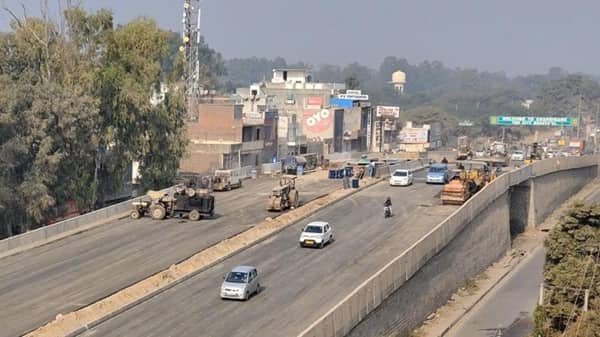
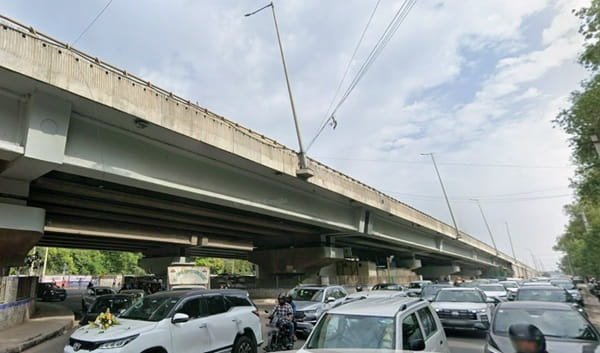
Moolchand is an important South Delhi junction where Lala Lajpat Rai Marg, Ring Road and routes toward Defence Colony, Lajpat Nagar and Greater Kailash meet. The area has both a flyover and a separate underpass, which is why route descriptions can sometimes be confusing. The Moolchand Flyover itself is a long-standing PWD structure on Lala Lajpat Rai Marg, while the Moolchand Underpass on Ring Road is a different facility.
Delhi PWD records the Moolchand Flyover as a completed structure dating to 1982. Despite its age, it remains an important part of the South Delhi road network because it carries through traffic above one of the city’s busiest junction areas.
Moolchand Flyover Quick Overview
| Particular | Details |
| Location | Moolchand, South Delhi |
| Main Road | Lala Lajpat Rai Marg |
| Opened/Recorded | 1982 |
| Authority | Delhi PWD |
| Separate Structure | Moolchand Underpass on Ring Road |
| Nearest Metro | Moolchand Metro Station, Violet Line |
| Nearby Areas | Lajpat Nagar, Defence Colony, Greater Kailash, South Extension |
| Best For | Through movement across the Moolchand junction |
Where Is Moolchand Flyover Located?
Moolchand Flyover lies close to Moolchand Metro Station and the Ring Road–Lala Lajpat Rai Marg intersection. The surrounding area is dense with hospitals, residences, markets and major arterial roads, making lane selection important for drivers who need to distinguish between the flyover, underpass and surface junction.
Connectivity of Moolchand Flyover
The flyover helps traffic move along the Lala Lajpat Rai Marg corridor between central/south Delhi destinations. Nearby Ring Road provides east-west access toward AIIMS/South Extension in one direction and Lajpat Nagar/Ashram in the other. Local roads connect to Defence Colony, Greater Kailash and Amar Colony.
Directions to Moolchand Flyover
The most useful approach depends on where the trip starts and whether the driver needs the elevated through route or a local surface-road turn.
| Starting Point | Route / Direction |
| Lajpat Nagar Side | Approach Moolchand through the local/Ring Road network and follow signs for Lala Lajpat Rai Marg or the flyover according to your destination. |
| Defence Colony Side | Use the Lala Lajpat Rai Marg corridor towards Moolchand; stay on surface lanes if your destination is immediately around the junction. |
| Greater Kailash Side | Approach via local arterial roads toward Moolchand and select the appropriate flyover or Ring Road movement before the intersection. |
| South Extension / AIIMS Side | Travel east on Ring Road and use the correct turn/underpass/flyover approach depending on whether you are continuing on Ring Road or shifting to Lala Lajpat Rai Marg. |
| Central Delhi Side | Use the Lala Lajpat Rai Marg corridor southbound and follow the elevated route for through movement across Moolchand. |
Live navigation is recommended during peak periods because temporary traffic controls, road works, incidents or local diversions can change the fastest approach.
Nearby Areas Around Moolchand Flyover
The flyover serves more than one neighbourhood. These are the main nearby areas and why they matter to commuters.
| Nearby Area | Why It Is Relevant |
| Lajpat Nagar | Major residential and shopping district east of Moolchand. |
| Defence Colony | Established South Delhi neighbourhood immediately north/northwest of the junction. |
| Greater Kailash I | Prominent residential and commercial area south of Moolchand. |
| Amar Colony | Dense mixed residential-commercial pocket near Lajpat Nagar. |
| South Extension | Major shopping/residential district along Ring Road. |
| Moolchand Hospital Area | Important landmark beside the junction. |
| Andrews Ganj | Neighbourhood connected through the wider Ring Road network. |
| Kailash Colony | Residential-commercial area served by local roads and the Violet Line. |
Why Moolchand Flyover Matters in South Delhi
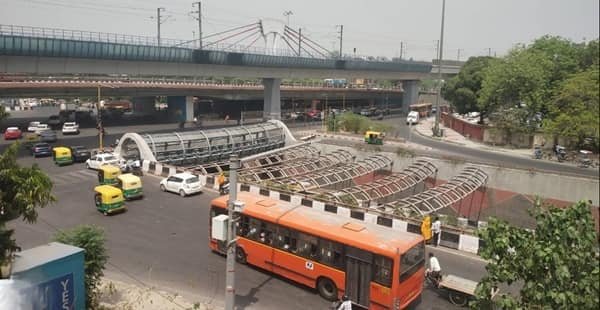
Moolchand is a good example of how several grade-separated solutions can work at one junction. The flyover carries traffic on Lala Lajpat Rai Marg, while the separate Ring Road underpass handles another movement and surface streets serve local access. This layered arrangement helps a very busy South Delhi intersection function despite heavy traffic from residential areas, hospitals, markets and the Metro station.
Route Planning Notes
The main planning mistake is choosing the wrong level. Drivers should check whether their route continues on Lala Lajpat Rai Marg, Ring Road or a local street before they reach the junction. Once committed to the flyover or underpass, an immediate local turn may no longer be possible, so early lane selection is more important here than simply following the shortest map line.
Public Transport and Local Access
Moolchand Metro Station on the Violet Line is located in the junction area and is one of the easiest ways to reach nearby neighbourhoods without driving. DTC buses, autos and cabs are widely available. The presence of the Metro station, hospital and commercial areas creates substantial pedestrian activity at street level.
Driving Tips
- Do not confuse the Moolchand Flyover with the Ring Road underpass; follow lane signs for your actual road.
- Use surface lanes for the hospital, Metro station and nearby neighbourhood entrances.
- Expect heavy pedestrian and auto-rickshaw activity near station exits.
- Choose the correct Ring Road/Lala Lajpat Rai Marg lane early.
- Never stop on the flyover to pick up passengers from the Metro station.
FAQs
1. Is Moolchand Flyover the same as Moolchand Underpass?
No. The flyover is on Lala Lajpat Rai Marg, while the underpass is a separate Ring Road facility.
2. Which Metro line serves Moolchand?
Moolchand Metro Station is on the Violet Line, providing direct rail access toward central Delhi and the Faridabad side.
3. Why is the junction confusing for first-time drivers?
Several grade-separated and surface movements meet here. Drivers must distinguish between Ring Road, Lala Lajpat Rai Marg, the underpass and local exits.
4. Should hospital-bound vehicles take the flyover?
Usually the surface road is more useful for immediate local access. Follow navigation and hospital-entry signage rather than staying on the elevated route automatically.
5. Is the flyover suitable for stopping to drop Metro passengers?
No. Drop-offs should be made at a safe, legal street-level point away from the elevated carriageway.
6. Does the flyover remain important despite being an older structure?
Yes. It still carries through traffic across a major South Delhi junction and works together with the underpass and surface roads.